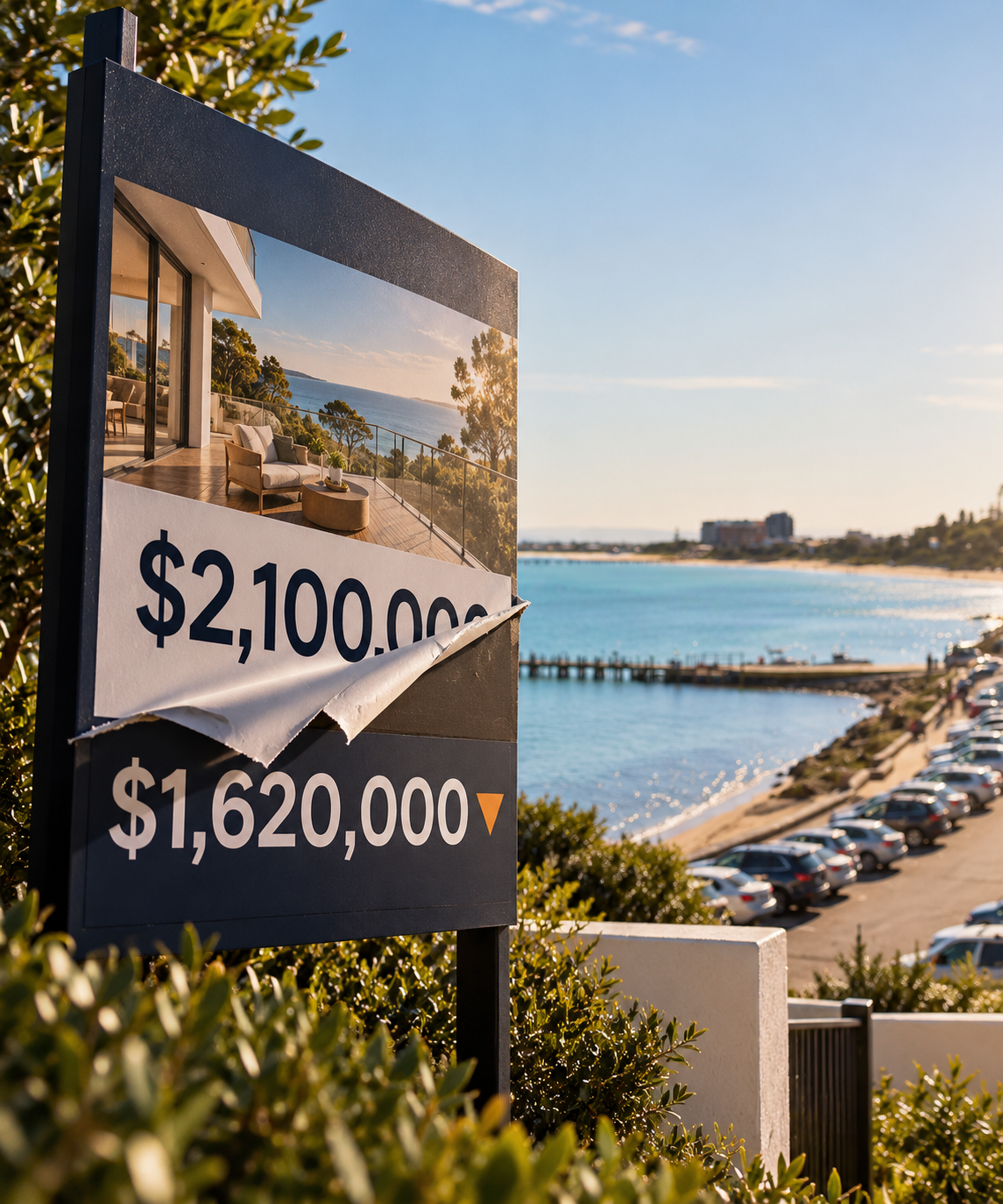
If your agent is willing to put a number on your home that sounds too good to be true, ask them one simple question: how did you arrive at that price? If they can’t back it up with comparable sales, you’re not being given an appraisal. You’re being given a number designed to win the listing. And an overpriced listing almost always ends up selling for less than a realistically priced one would have.
The giveaway hiding in your paperwork
In Victoria, every property for sale comes with a Statement of Information, which has to include a small set of comparable sale prices. It’s worth actually reading yours. If it comes back close to empty, with no real comparables listed, that’s usually a sign the owners (or the agent advising them) are chasing a price the recent sales in the area don’t support. Sometimes there genuinely aren’t good comparables nearby, but more often it’s a quiet admission that the number on the sign isn’t grounded in anything.
Your first two weeks are the campaign
Buyers now have more information at their fingertips than at any point in the past. Every price, every price drop, every stale listing is visible and searchable. That means the first fortnight your home is live is the most important part of the entire campaign. A property that goes to market at a genuinely achievable price draws serious buyers while it’s fresh and creates competition. A property that goes out too high sits there losing momentum, and buyers watching the portals start to notice.
What tends to happen next is a slow retreat. We’ve seen overpriced homes get walked down in stages: a big number at launch, then a reduction, then another, before finally settling months later at a figure that, had it been the asking price from day one, would likely have sold faster and for more. Buyers read a declining price the same way they read a rising one. It tells a story, and a falling price tells them the owner is getting nervous.
Why agents overprice in the first place
The honest answer is competition for the listing. An agent who tells you what you want to hear gets the signed authority. An agent who gives you the real range, backed by recent sales, often sounds less exciting by comparison, even though they’re the one giving you something you can actually use. If three agents come through your home and two of them land in a similar range while one comes in well above it, that’s not a coincidence. It’s worth asking that outlier agent to show you exactly which sales support their number.
Fees get caught up in this too. Say one agent appraises your home at a confident high figure and charges a lower commission rate. We might appraise the same property more conservatively, giving a realistic range rather than a single inflated number, and charge a higher rate. On paper the fee looks like a bigger gap than it is. Worked through on an actual sale price, the difference in dollars is often much smaller than people expect. The real cost isn’t the commission rate. It’s what happens to the sale price when an inflated number has to be walked back down over the following weeks.
How to keep an agent accountable to their own number
If you do get a high appraisal and want to go with that agent anyway, there’s a straightforward way to test whether they believe it themselves: ask them to put something on the line. Agree on a figure with them in writing, and agree that if the campaign doesn’t achieve a result above that figure, the marketing costs and the fee come down. Every agency agreement through the REI is negotiable, including commission, fees and terms, regardless of what you might be told about “office policy.” An agent who’s genuinely confident in their number will have no issue agreeing to that. One who backs away from it has told you everything you need to know.
When testing the market quietly can work
Taking a property to market off market, without an online listing, isn’t automatically a bad idea. In a strong market it can save on marketing costs and still give you a useful read on price if you’re weighing up another decision, like whether to sell before you buy elsewhere. But it comes with a trade-off. We’ve seen properties sold this way that, had they gone to the open market with full exposure, would have achieved a noticeably higher price. Saving a few thousand dollars in marketing can end up costing you far more in the final sale figure, because you’ve narrowed the pool of buyers competing for the home.
The bottom line
- A high “let’s test the market” price is rarely about protecting your interests. It’s usually about winning the listing or avoiding a hard conversation
- Check your Statement of Information: a lack of genuine comparable sales is a signal the price isn’t grounded in the market
- The first two weeks of a campaign matter more than any other stage, so price it right from day one
- If an agent won’t tie their fee or marketing cost to the price they’ve promised you, that promise isn’t worth much
- Going off market can suit a confident seller wanting to save on marketing, but it can also mean leaving money on the table by limiting who sees the home
This article draws on a conversation between Juan and Josh Merchan on the Selling Frankston podcast. Juan has been selling property in Frankston and Frankston South for more than 25 years.
You might also be interested in

Oct 23, 2026
Why Comparing Your House to Last Year’s Sale Could Cost You
If you’re pricing your home based on what a similar property sold for a year ago, you’re already behind. Markets move, and the biggest mistake we see sellers make is anchoring to a sale that happened